
Mobile Apps Built from a Single, Scalable Codebase
We build iOS and Android apps with React Native: one TypeScript codebase for both platforms, so most work is done once and every fix reaches both app stores together. Native features like the camera, push notifications and biometrics go in only where they help your users.
- One React Native codebase for iOS and Android, instead of two separate native apps
- Each fix and feature ships to both platforms from the same change
- Consistent screens and behavior across devices, with platform conventions respected where they matter
- Native features only where they add value: camera, push notifications, biometrics, location
- Tested on real iPhones and Android phones before it goes to the App Store and Google Play
What's Included in a Cross-Platform App Build
- Discovery and planning, written into a proposal with fixed hours and a fixed price for each phase
- A React Native app built with Expo and TypeScript: one shared codebase for iOS and Android
- A shared component library, so every screen uses the same tested buttons, forms and layouts
- Sign-in, user accounts, and roles for people who need to see different things
- The backend: a database, APIs and an admin dashboard, or a connection to the system you already run
- Native features where they earn their place: camera, push notifications, file access, biometric sign-in, location
- Testing on real devices, plus test builds you can install on your own phone before launch
- App Store and Google Play submission: builds, listings, screenshots, privacy details and reviewer questions
When React Native Wins (and When Native Code Helps)
Most business mobile applications are screens, forms, lists, accounts and notifications, and that work is the same on iOS and Android. Writing it twice, in Swift and in Kotlin, means building it, and every later change, twice. React Native writes it once in TypeScript and still draws real native interface elements; where a feature needs deeper device access, we add native code for that feature alone.
Faster Time to Market
Each feature is built once, not once per platform. That's how iOS and Android app development fits an MVP timeline: the smart-energy MVP built in a previous role went from kickoff to a working app in 4 months on one React Native codebase.
Lower Maintenance, Fewer Bugs
Each bug lives in one place. Fix it once and the fix reaches both platforms in the next release, with no second version to patch in another language, for the life of the app.
Native Only When Needed
Expo's libraries cover the camera, push notifications, file access, Face ID and fingerprint sign-in, and location. We add each when a feature needs it, and write custom native code only when no library fits.
Consistent Experience Across Platforms
Customers get the same features and fixes on every phone, while gestures and date pickers still feel right on each platform. You document and support one app, not two.
Technology Stack
Our React mobile app development runs on React Native and Expo, with TypeScript throughout: widely used, well-documented tools another developer can pick up later, sharing types and API code with a React web product.
 React Native
 Expo
 TypeScript
- React
- NativeWind
 Node.js
Also covered
- Shared UI components
- iOS & Android builds
- REST API
- Authentication & user management
- Push notifications
- App Store & Google Play submission
- Versioning & updates
Development Process
Every project starts with a free consultation, usually about 30 minutes. Then we write a proposal that splits the work into phases, each with fixed hours and a fixed price, and you review every milestone before we move on. A focused MVP usually takes 2-4 months and a full custom app 3-6 months.
Discovery & Platform Planning
1-2 weeksWe map your users, the key flows and every device feature the app needs, confirm what needs native code, and turn it into a phased plan with fixed hours and prices.
UX Design & App Architecture
2-3 weeksScreen designs for the key flows, the navigation pattern and a shared component library, plus the data model and how the app talks to your backend.
Build in Milestones
4-14 weeksWe build in React Native and TypeScript one phase at a time. After each milestone you get a build for your own phone and 5 business days to review it.
Device Testing & Beta
1-3 weeksWe test on real iPhones and Android phones, including slow connections and offline use where it matters. You can invite a few real users to a test build first.
App Store & Google Play Launch
1-2 weeksWe prepare the listings, screenshots and privacy details, submit under your developer accounts and answer reviewer questions. Apple and Google set their own review times, so the launch date leaves room.
Support & Updates
OngoingFree bug fixes for at least one month after launch, longer for larger projects. Then optional support: hourly, or a monthly plan from $375 for 5 hours.
Estimate Your App
An app's cost depends on its screens, its backend and the services it connects to. Start the estimator with Mobile App picked for a first range, then talk it through with us for free before anything is fixed.
Pricing estimator · step 1
What are you building?
Each choice opens the estimator on /pricing with that project type already picked.
Every project includes
- Published under your own Apple and Google developer accounts
- The code and designs are yours after the final payment
- Free bug fixes for at least a month after launch
- A free first consultation, usually about 30 minutes
- A fixed-price proposal, broken into phases
- A reply within 1 business day
Ideal Clients
For when you need iOS and Android app development without paying for two separate apps, and the app's value is in its features and data rather than heavy graphics.
SaaS founders
Teams building SaaS mobile apps as companions to an existing platform: accounts, notifications, quick approvals and reports, on the same backend as the web product.
Startups building MVPs
Founders who need MVP mobile app development to test with real users or investors, on a foundation that won't need a rewrite. Our MVP Build tier usually takes 2-4 months.
Businesses extending a web product to mobile
Companies with a working web app or customer portal that want to be in the App Store and Google Play. We connect a React Native app to your existing APIs.
Organizations hiring for the whole job
Organizations that want to hire a mobile app developer for the whole job: the app, the backend, store submission and updates, with a fixed price for each phase.
Frequently Asked Questions
Got questions? We've got answers. Find the most common questions about this service below.
Should I build a native or cross-platform app?
For most business apps, cross-platform. A React Native app draws real native interface elements, runs on iOS and Android from one codebase, and can use the camera, push notifications, biometrics and location. Fully native apps, written separately in Swift and Kotlin, suit graphics-heavy games, advanced augmented reality or hardware-intensive apps; if yours is one, we'll say so.
What kinds of apps are a good fit for cross-platform app development?
SaaS companion apps, customer and member portals, internal staff tools, dashboards, booking and ordering, and form-heavy workflows. If your app depends on intensive real-time graphics, we'll discuss whether native is the better fit.
How much does mobile app development cost?
A full custom iOS and Android app is our Custom App Development tier, $18,000 - $50,000; a focused first version fits the MVP Build tier, $8,000 - $20,000. Price depends on the screens and user roles, whether we build the backend or connect to yours, native features, integrations such as payments, and offline support. Store accounts are yours: Apple charges a yearly developer membership fee and Google Play a one-time registration fee, both paid by you directly. Each phase has a fixed price, and most projects are paid in four 25% milestone payments.
Do I need an app in the stores, or will a web app do?
Sometimes a web app is enough. If people use it mostly at a desk, occasionally, or find you through search, a responsive web app costs less, skips store review and can still sit on a phone's home screen. A store app earns its cost when people open it often, rely on push notifications or biometric sign-in, or expect to find you in the stores.
Can you add camera, push notifications and biometrics?
Yes. React Native and Expo give an app the camera, push notifications, file storage, Face ID and fingerprint sign-in, and location, added when a feature needs them. Some add submission steps, like telling Apple and Google why the app asks for location; we handle those too.
How does App Store and Google Play submission work?
The app is published under your own Apple and Google developer accounts, so it appears under your business name; you enroll and pay the store fees, with our help, and add us to the team. We prepare the builds, listings, screenshots and privacy details, submit them and answer reviewer questions. Both stores review apps on their own schedule. Organizations enrolling with Apple need a D-U-N-S Number, so request one early.
Who owns the app, the code and the store accounts?
You do. After the final payment, you own the app's code, designs and database structure, and the app is listed under your own developer accounts. Hosting and database services are billed to you directly. If a project starts on our code or hosting accounts for convenience, we move it to yours whenever you ask.
How fast can you start?
Usually within 3-5 business days of the proposal being approved, and often sooner. We reply to every inquiry within 1 business day, and the first consultation is free. If you have a hard launch date, tell us up front and we'll say honestly whether it fits, app store review included.
What happens after launch?
Bugs found in the first month after launch (longer for larger apps) are fixed free. From then on, support is up to you: hourly, or a monthly plan from $375 for 5 hours. Apple and Google regularly change their operating systems and store rules, so ongoing support keeps the app current.
Can you work with an existing codebase?
Yes. We can review your web or mobile code, recommend a cross-platform plan and build new features without stalling your roadmap. A React web app's TypeScript logic and API code can often be shared with a new React Native app. Work on an existing app falls in our Update Existing Site/App tier, $1,000 - $10,000.
See Our Work in Action
Real projects built with the same skills and technologies described on this page.
Home & productivity
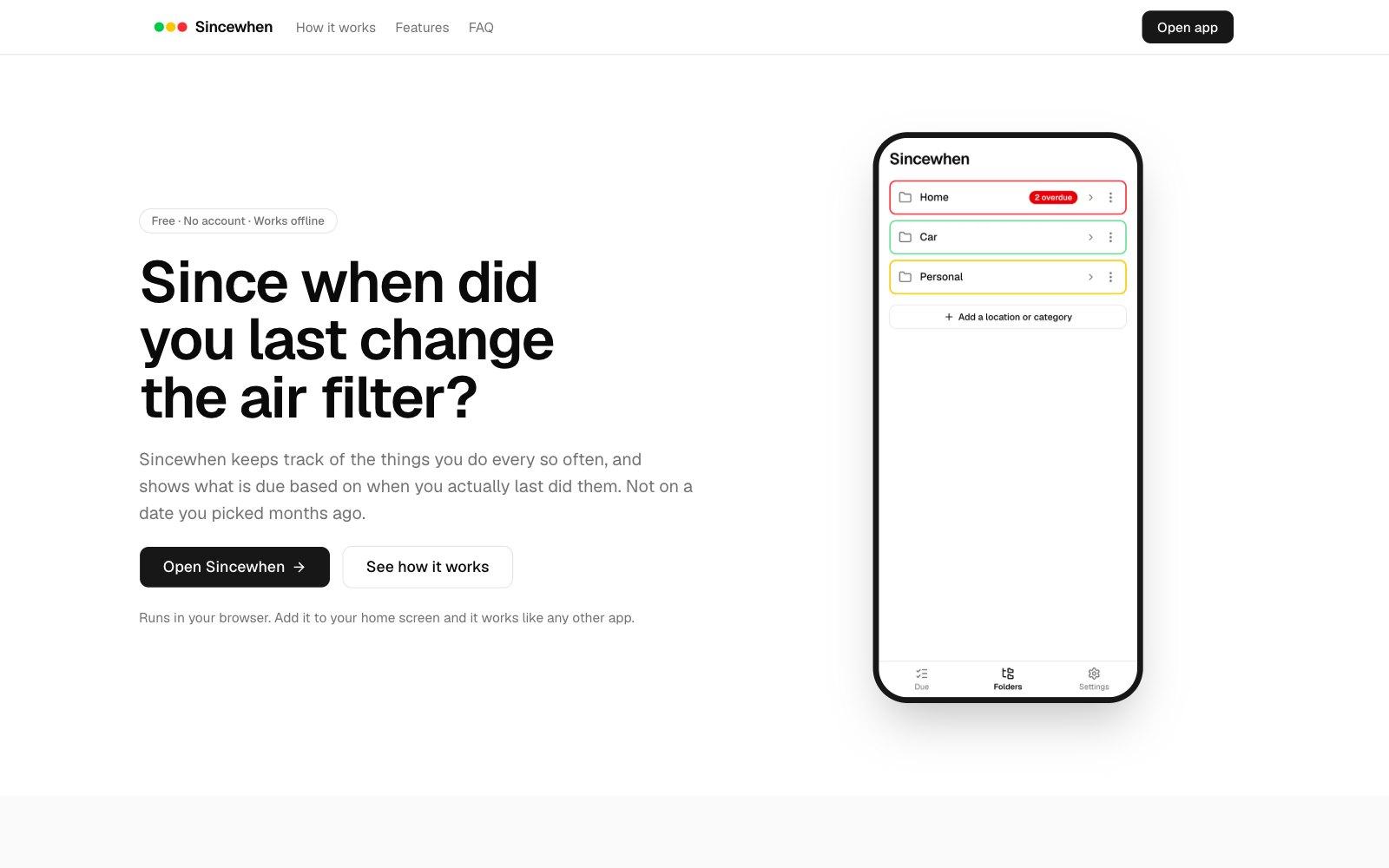
Sincewhen: Offline-First Recurring Task App
A chore tracker that counts time since each task was last done instead of calendar dates, so the most neglected room stands out at a glance.
96 to 100Accessibility score with tasks loaded
Next.js · React · TypeScript
View projectEnergy & utilities
In-house work at a previous employer
Energy & utilities· In-house work
IoT Smart Energy MVP
Delivered an MVP in four months that proved smart-home demand response to national utilities and won a continued roadmap.
4 monthsfrom kickoff to a working MVP
React Native · TypeScript · NativeWind
View projectWeb Wizard Dev is a Philadelphia-based software development studio serving clients nationwide.
Let's Build Your Mobile App
Looking for a mobile app development company that builds iOS and Android apps with React Native? Tell us about the app you have in mind, and we'll set up a free consultation. Expect a reply within 1 business day.