
Prototype & MVP Development Built for Real Validation
We help founders and teams turn ideas into working software quickly, focused on the one workflow that matters and ready to grow if the idea proves itself.
- Launchable MVPs built on code you can keep
- Software prototypes designed to evolve into real products
- Business-first decision making with clear tradeoffs
- Senior-level engineering and direct communication
- A foundation built for real users, real data, and iteration
- Most MVPs launch in 2-4 months, built in fixed-price phases
Prototype vs MVP (What's the Difference?)
- Prototype: working software with a narrow scope, built to test one workflow, check your assumptions and get early feedback before a bigger build
- MVP: a real product for real users and real data, with sign-in, the core workflow and the admin tools to run it, designed to change as you learn
- Rapid prototyping without rushed code: both should be simple, but not sloppy
- Production-quality foundations even when the scope is lean: the data model, sign-in, roles and deployment are done properly once
- No throwaway architecture: the codebase has a clear path to scale
- If the idea proves itself, you keep building on your MVP instead of starting over
- The code, designs and database structure are yours once the final payment is made
- Free bug fixes for at least one month after launch, longer for larger projects
Our MVP Philosophy
An MVP should be simple, but it shouldn't be sloppy. The goal is to validate your idea quickly without creating a fragile system that slows you down after launch. We keep scope tight while still building software you can confidently grow. In practice, that means one core workflow done well, only the supporting features it needs, and a clear list of what we deliberately left out, so the next round of work starts from a plan rather than a guess.
Build Only What Proves the Idea
We prioritize the smallest set of features that validate demand and user behavior, then measure and iterate. If a feature won't help you decide whether to build, pivot or stop, it waits for version two.
Production-Quality Foundations
Authentication, roles, data modeling, and API boundaries are designed to be maintained, so the product can change safely. They're the parts that are expensive to redo later, so we get them right in the first version and keep everything else simple.
Speed with Intention
We move fast, but we're explicit about tradeoffs. You'll always know what we're skipping, why, and when to revisit it. Each phase has fixed hours and a fixed price, and you see each milestone before the next one starts.
Founder Collaboration & Clear Communication
You work directly with a senior engineer, not an account manager. Requirements stay crisp, decisions stay grounded, and progress stays visible. When a build needs more hands, we bring in trusted developers, and you keep one point of contact who knows the whole product.
Technology Stack (Built for Launch)
We use a modern stack that's fast to build with and reliable in production, which suits startup MVP development and SaaS MVP development alike: React and Next.js for the interface, TypeScript throughout, and PostgreSQL through Supabase for data and sign-in. For MVP app development on iOS and Android, we use React Native and Expo, the stack behind a smart-energy MVP built in four months in a previous role. Payments run through Stripe.
 React
 Next.js
 TypeScript
 Tailwind CSS
 Node.js
- React Native
 Expo
 PostgreSQL
 Supabase
 Stripe
- Playwright
 Vitest
 Vercel
- AWS
Also covered
- REST API
MVP Development Process
We run a tight, founder-friendly process that keeps scope realistic and delivery predictable, so you can build an MVP, launch it and learn quickly. A focused MVP with one core workflow can launch in about 8 weeks; most take 2-4 months. Every proposal splits the work into phases with fixed hours and a fixed price, usually paid in four 25% milestones, so you know what each step costs before it starts.
Discovery & Scope
1-2 weeksClarify the problem, the user, and the one core workflow that proves value. Define what success looks like for validating your startup idea, then turn it into a feature list: what's in, what waits, and what would change the decision to build, pivot, or stop.
Architecture & Design
1-2 weeksDesign the foundation (data model, sign-in, roles and permissions, APIs, and the deployment approach) and the key screens. If you already have designs or a no-code prototype, we start from them. We keep the structure clean and skip the over-engineering.
Build in Milestones
4-10 weeksBuild the core workflow in small releases. Each milestone is shown to you on a staging or live site, and you have five business days to review it and ask for revisions, so you can course-correct early.
Beta with Real Users
1-2 weeksPut the product in front of a small group of real users. Refine the UX, tighten the wording, and fix what they trip over, based on what they actually do rather than what they say they'll do.
Launch
1 weekShip to production with monitoring, analytics, and a deployment pipeline. Your domain is registered in your name, and hosting is billed to you directly by the providers. Launch day is planned like any other milestone.
After Launch
OngoingFree bug fixes for at least one month after launch, longer for larger projects. After that, keep building in new fixed-price phases, or choose hourly support or a monthly plan from $375 for 5 hours.
Price Your MVP
An MVP's price follows the smallest scope that proves your idea, so anything that can wait comes out of the first build. The estimator gives you a first range, and the free consultation is where we trim the scope with you.
Pricing estimator · step 1
What are you building?
Each choice opens the estimator on /pricing with that project type already picked.
Every project includes
- A fixed-price proposal, broken into phases
- Four equal 25% milestone payments, the last before launch
- Code you own once the final payment is made
- Free bug fixes for at least a month after launch
- Work starts within 3-5 business days of approval
- A free first consultation
Who This Is For
MVP development for startups is the core of this service, but it fits any team that needs a technical partner to turn ambiguity into a launch-ready product.
Startup founders
Founders who want to test an idea with real software instead of a pitch deck, and want the first version to be something they can keep building on.
Non-technical founders
You need a senior engineer who can translate goals into a concrete MVP plan, explain the tradeoffs in plain language, and ship it end-to-end.
Businesses testing new products
Teams exploring a new revenue stream or product line who need a prototype development partner with strong execution and a fixed price for each phase.
Internal tool validation
Companies validating internal tools, workflows, and dashboards before investing in a larger build.
Founders outgrowing a no-code prototype
You proved the idea in a no-code tool or a spreadsheet, and now you need permissions, performance, or integrations it can't provide. We rebuild it in code, using what you learned as the spec.
Founders preparing to raise
You want a working product with real users to show, not slides. We keep the MVP focused so it reaches users, and investors, sooner.
Frequently Asked Questions
Got questions? We've got answers. Find the most common questions about this service below.
Do you build prototypes or MVPs?
Both. Prototype development is ideal for testing workflows and assumptions quickly. MVP development is for launching a real product to real users. In both cases, we build production-quality foundations so your work can evolve.
What do you mean by 'no fake demos'?
We don't deliver click-through mockups disguised as software. If you're paying to build, you should get real authentication, real data, real workflows, and a codebase that can grow.
How long does it take to build an MVP?
Most MVPs take 2-4 months from kickoff to launch, and a focused MVP with one core workflow can launch in about 8 weeks. Scope sets the timeline: extra user roles, payments, connections to other systems, and native mobile apps each add time. We can usually start within 3-5 business days of approval, and your proposal gives a timeline for each phase before work begins. For reference, a smart-energy MVP built for national utilities in a previous role, with iOS, Android, and web apps, took four months from kickoff to a working MVP.
Can an MVP become the full product?
Yes, that's the goal. We design MVPs with a clean architecture and sensible foundations so you can add features without rewriting from scratch.
Do you handle SaaS MVP development (auth, roles, payments)?
Yes. Most MVPs need sign-in and user roles, an admin dashboard, and often payments and analytics alongside the core workflow. We've built each of these for client products, including an admin console with staff roles and online payments through Stripe for a union benefits fund's member portal.
Will you tell me if my MVP scope is too big?
Yes. Honest guidance is part of the job. We'll push for clarity, cut distractions, and keep the build focused on validation.
How much does MVP development cost?
Our MVP Build projects typically run $8,000 - $20,000. Where yours lands depends on how many user roles and screens the core workflow needs, whether it takes payments, which outside systems it connects to, and whether it ships as a web app, a mobile app, or both. A focused web app with one workflow sits at the lower end; payments, integrations, and real-time features push it higher. Every proposal splits the work into phases with fixed hours and a fixed price, usually paid in four 25% milestones, so you know the cost before work starts. Hosting is separate: for a web app with a database and email, the providers bill you directly, usually about $100-$250 a month.
Who owns the code for my MVP?
You do. When the final payment is made, everything we built for the MVP is yours: code, designs and database structure. Your domain is registered in your name, and hosting, database, and email are billed to you directly. If a project starts on our hosting or code accounts for convenience, we move it to yours whenever you ask. We keep the right to show non-confidential parts of the work in our portfolio.
What happens after the MVP launches: do we scale it or rebuild it?
In most cases, you scale it. That's why we build the data model, sign-in, and roles properly in the first version: they're the expensive parts to redo. You get free bug fixes for at least one month after launch, longer for larger projects. After that, new features are scoped as new fixed-price phases, and ongoing support is hourly as needed or a monthly plan from $375 for 5 hours. A rebuild only makes sense when users show you the product should be something quite different, and that's a decision we make with you, with the costs laid out first. One client's regulated e-commerce store, for example, has stayed in active development since launch, including a full brand redesign.
Can you work with my existing designs or a no-code prototype?
Yes. If you have designs in Figma or another tool, we build from them and point out anything that would be slow or costly to build as drawn. If you validated the idea in a no-code tool like Bubble, Glide, or Airtable, or even a spreadsheet, we treat it as a working spec: it shows us the workflow, the data, and what users actually do. We rebuild it in code, which gives you the permissions, performance, and integrations the no-code version couldn't, and we move your existing data over where the tool can export it.
See Our Work in Action
Real projects built with the same skills and technologies described on this page.
Home & productivity
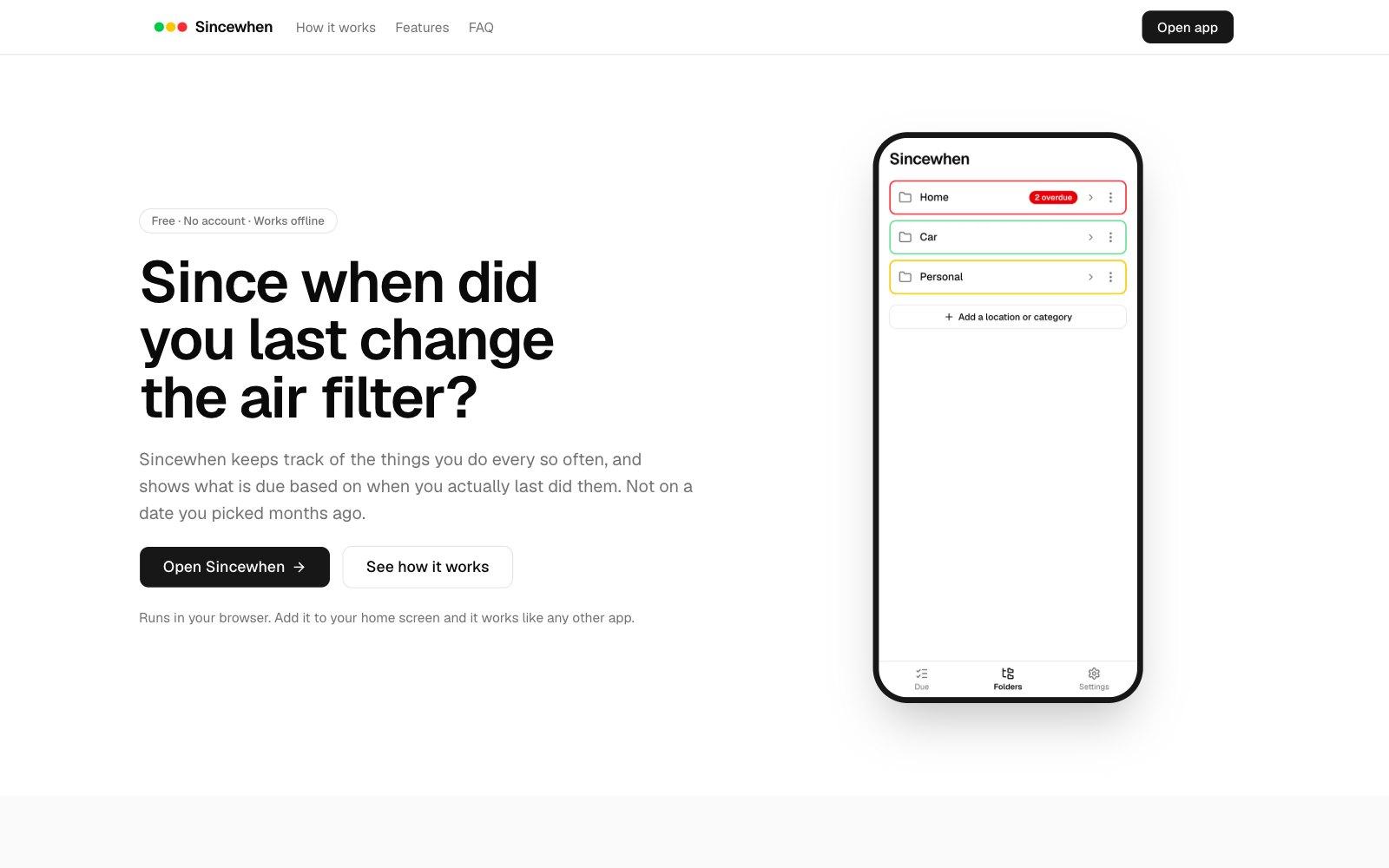
Sincewhen: Offline-First Recurring Task App
A chore tracker that counts time since each task was last done instead of calendar dates, so the most neglected room stands out at a glance.
96 to 100Accessibility score with tasks loaded
Next.js · React · TypeScript
View projectEnergy & utilities
In-house work at a previous employer
Energy & utilities· In-house work
IoT Smart Energy MVP
Delivered an MVP in four months that proved smart-home demand response to national utilities and won a continued roadmap.
4 monthsfrom kickoff to a working MVP
React Native · TypeScript · NativeWind
View projectWeb Wizard Dev is a Philadelphia-based software development studio serving clients nationwide.
Let's Validate Your Idea
If you're ready to build an MVP or software prototype that can grow into a real product, let's talk. The first consultation is free, usually about 30 minutes, and we reply within 1 business day. We'll define scope, align on tradeoffs, and map the fastest realistic path to a launch you can learn from.