
Fix What's Broken. Improve What Matters.
Your site is live and people rely on it, but it's slow, it looks dated, or every change breaks something. We update existing websites and applications from the inside: an audit first, then the fixes that matter most, shipped in small, tested steps so the site can stay live while it improves. Website redesigns, performance fixes and ongoing maintenance all start from that audit, so you keep what already works.
- We can take over a codebase another developer built, even if they're no longer around
- Incremental website modernization instead of a rewrite for its own sake
- Speed fixes for a slow website, measured before and after
- A plain-language plan that names the risks before any big change
- A rebuild recommended only when repair would cost you more
Common Reasons Clients Reach Out
- The site works, but it's slow on a phone and visitors leave before it loads
- The design looks dated and the mobile layout is hard to use
- The original developer is gone and nobody knows how the code fits together
- Every new feature breaks something that used to work
- Bugs are piling up and each release feels risky
- Security alerts and outdated-dependency warnings keep appearing
- The framework or language version is end-of-life and no longer gets security fixes
- Performance drops as traffic or data grows
- You're changing hosts or platforms and old links need to keep working
- You need a senior developer to fix the app and give you a clear plan
How We Approach Existing Codebases
With live users and real revenue at stake, the goal isn't perfection. It's steady progress without breaking what already works. We learn what's risky, what's valuable and what can be improved safely before we change anything.
Codebase Review & Risk Audit
We read the code, check dependencies for security issues and end-of-life versions, measure page speed, and map fragile areas like payments, sign-in and forms before touching them. You get the findings in plain language, with a recommended order of work.
Incremental Improvements
We ship small, high-impact changes one at a time: performance fixes, refactors, design updates and stability work, each small enough to review on its own.
Backwards Compatibility & Live Users
Your users should notice the results, not the work. We protect critical workflows, give moved pages permanent redirects, and when a breaking change can't be avoided, we tell you early and plan the migration.
Clear Communication Before Big Moves
You get honest guidance, tradeoffs and a plan before anything big happens. If something isn't worth the money, we'll say so and explain why. Scope changes are agreed in writing, with their effect on cost and time, before the work starts.
Redesigns That Protect Search
A website redesign shouldn't throw away what search engines already know about your site. We carry over page titles, descriptions and structured data and redirect old URLs to their new pages, to help preserve search visibility.
Measured, Not Assumed
We check speed, accessibility and search basics on the pages that matter, before and after the work, so you can see what changed. The recording studio site we maintain scores 100 for Lighthouse accessibility and SEO on its live home page (mobile, Sep 2026).
Technology Experience
React and Next.js, often with Supabase and PostgreSQL, make up most of our recent work, so React app maintenance and Next.js website updates are where we step in fastest. We keep older stacks running too: the recording studio site we maintain runs on Jekyll, and its 2026 update moved it off an end-of-life Ruby version. On another stack, we'll look first and tell you honestly if we're the right fit.
 React
 Next.js
 TypeScript
 Tailwind CSS
 Node.js
 PostgreSQL
 Supabase
 Stripe
 Contentful
 Jekyll
 Ruby
- React Native
 Expo
- Playwright
 Vitest
 Vercel
 Netlify
Also covered
- REST API
A Practical Update Process
Every system and budget is different. The common thread is a calm, production-minded workflow: understand the risk, fix what matters most, and ship improvements in phases you approve.
Discovery & Access
1-3 daysIt starts with a free consultation, usually about 30 minutes and up to an hour for larger projects. Once you approve the work, we start within 3-5 business days: access to the code, hosting and domain, and an agreed definition of 'better', whether that's speed, reliability, design or search visibility.
Audit & Prioritization
2-7 daysWe review the code, dependencies, hosting and page speed, then sort findings into quick wins and higher-risk work. You get a prioritized plan in phases, each with fixed hours and a fixed price, so you decide what to do now and what can wait.
Stabilize & Fix the Biggest Issues
1-2 weeksWe fix the riskiest bugs first, clear security and dependency warnings, and set up a safer way to release changes. Each milestone is shown to you on a staging or live site, and you have 5 business days to review it and ask for revisions.
Modernize Incrementally
1-6 weeksUpgrade frameworks, refactor brittle areas, improve Core Web Vitals and carry out the redesign if there is one. We can update existing website pages in place, a section at a time, instead of rebuilding everything at once. Smaller jobs may finish before this phase.
Feature Enhancements
As neededAdd new features the right way: clean interfaces, tested behavior and changes that don't make the next feature harder. Feature work can run alongside the upgrade once the riskiest problems are fixed.
Launch & Handover
Launch + at least 1 monthWe release the update, check it on the live site and update the documentation. You get free bug fixes for at least one month after launch, longer for larger projects. Once the final payment is made, the code, designs and other deliverables belong to you.
Ongoing Maintenance
OptionalTo keep the site healthy afterward, choose a monthly support plan from $375 for 5 hours, or book hourly work as needed.
Estimate Your Update
Updates are priced after we see the code: a few targeted fixes cost far less than a rebuild, and we tell you which one your site needs. Choose Update a Site or App for a starting range, then send us the details.
Pricing estimator · step 1
What are you building?
Each choice opens the estimator on /pricing with that project type already picked.
Every project includes
- A look at the existing code before we recommend fixes or a rebuild
- Permanent redirects when pages move, so old links keep working
- Each milestone shown on a staging or live site, with 5 business days to review
- Bug fixes free for at least a month after the work ships
- Everything we deliver is yours once it's paid for
- A reply within 1 business day
What We Update & Improve
This service is for organizations that already have something live and need it faster, more current and easier to change, without starting over.
Websites
Marketing and content sites that need a website redesign, faster pages, accessibility fixes, fresh content or a move to new hosting.
Web Applications
Member portals, online stores, dashboards and internal tools that need refactors, performance work, reliability fixes, security hardening or new features.
Mobile Apps
iOS and Android apps, including companion apps for a website or web app, that need stability fixes, UX updates or incremental modernization. We can work in React Native and Expo codebases.
Teams inheriting code
Founders and organizations who inherited an older codebase from a departed developer or agency and need a senior developer to make it maintainable again.
Frequently Asked Questions
Got questions? We've got answers. Find the most common questions about this service below.
What types of updates do you handle?
We handle UI/UX improvements, performance optimization, dependency and framework upgrades, bug fixes, feature additions, accessibility improvements, mobile responsiveness, and codebase cleanup/refactoring.
Do you recommend a full rebuild?
Only when it's justified, for example when the stack is deprecated, the architecture blocks growth, or maintenance is no longer realistic. If a rebuild is the right move, we'll explain why and outline options. Otherwise, we focus on safe incremental progress.
Can you take over or fix my website if another developer built it?
Yes. We can pick up a project that's already started, or a site whose developer has moved on, even with no documentation. We get access to the code, hosting and domain, audit it, and tell you what's solid, what's risky and what it would cost to fix. We write down what we learn so the next developer doesn't start from zero, and if the code or hosting sits on someone else's account, we can help move it into accounts in your name.
How do you avoid breaking changes for live users?
We favor incremental updates, protect critical workflows, and communicate clearly before any risky changes. When needed, we stage migrations and validate behavior through testing and careful release planning.
Can you help with Next.js website updates and React app maintenance?
Yes. Most of our recent work is in React and Next.js, including an online store we've maintained since July 2025 and redesigned in 2026. We can upgrade framework versions, update dependencies safely, improve performance and refactor for maintainability.
How much does it cost to update an existing website?
Update work is priced in our Update Existing Site/App tier: $1,000 - $10,000. Where a project lands depends on how much needs fixing, how the code is built and whether a redesign is included. After the audit you get a plan in phases, each with fixed hours and a fixed price. Smaller fixes, including jobs below that range, can be billed at our Hourly Consulting rate of $75/hr. Larger jobs are paid in four equal 25% milestone payments, and the first consultation is free.
Why is my website slow, and what does a performance audit involve?
A slow website usually comes down to a few causes: oversized images, too much JavaScript, third-party scripts and embeds, slow hosting or database queries, and layouts that shift while loading. A performance audit measures your key pages on a throttled mobile connection, finds which causes cost you the most and ranks the fixes by effort and impact. On the benefits fund's member portal, the slowest page's mobile Lighthouse performance score went from 76 to 96, and the main content appears within 1.2 s on 75% of real mobile visits.
Will a website redesign affect my SEO?
It can, if URLs change without redirects or pages lose their titles and content. We list the existing URLs, give every page that moves a permanent redirect to its new home, and carry over titles, meta descriptions and structured data. When the benefits fund's previous site was replaced, 25 permanent redirects carried its old URLs to their new pages. We can't promise rankings, but this work helps preserve search visibility.
Do you offer ongoing website maintenance?
Yes. We fix bugs in our work free for at least a month after launch, longer on larger projects. After that, book hourly work as needed or take a monthly support plan from $375 for 5 hours, for security updates, content changes and small fixes. Hosting, database and email are billed to you directly. We have maintained a recording studio's site since 2020.
See Our Work in Action
Real projects built with the same skills and technologies described on this page.
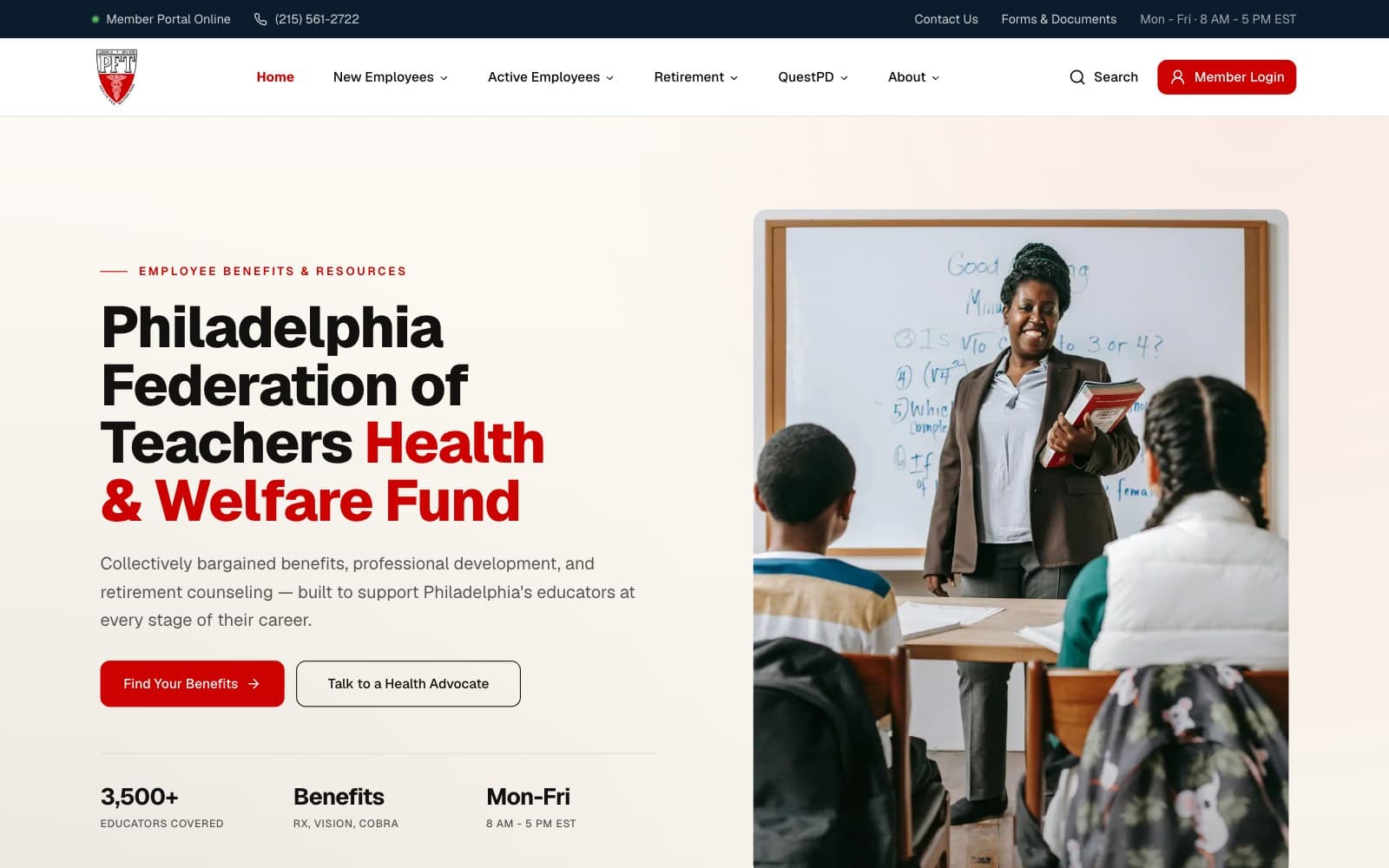
Labor union benefits
Benefits Fund Member Portal & Online Payments
Put a union benefits fund's premium collection online: more than 3,500 members have paid over 4,500 premiums through the new portal since March 2026.
3,500+members who have paid a premium online since March 2026
Next.js · React · TypeScript
View project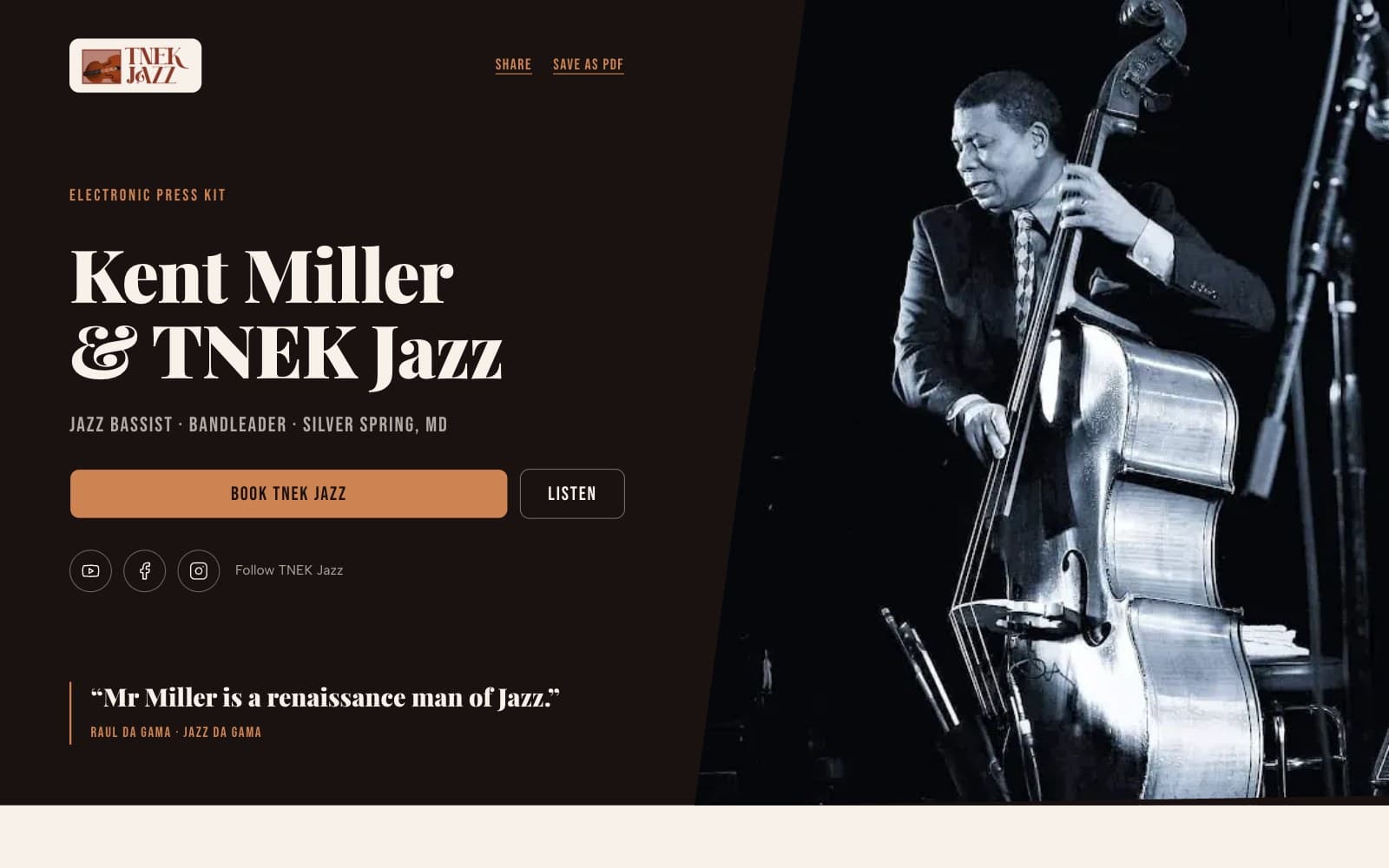
Music & entertainment
TNEK Jazz Press Kit & Booking Site
Rebuilt a jazz bassist's Wix site as a one-page press kit for venue bookers: the home page loads 73% less data, and its accessibility score rose from 84 to 100.
73% less dataon the home page than the old Wix site (2.1 MB to 573 KB, mobile)
Next.js · React · TypeScript
View project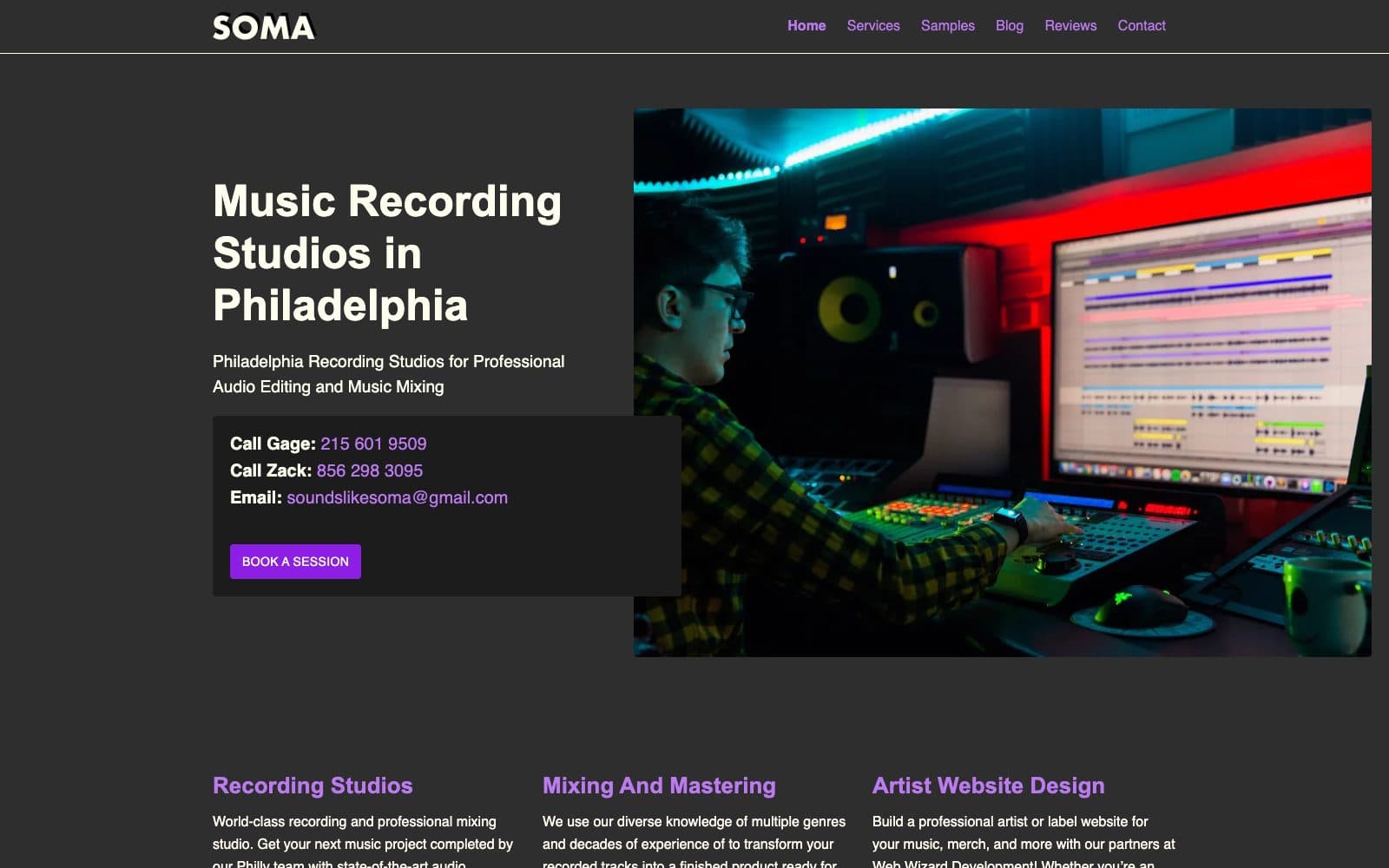
Music & recording studio
Recording Studio Website & Local SEO
Gave a Philadelphia recording studio a page for every service it sells, where artists can hear its work and book and pay online, on a static site kept current since 2020.
6 yearsmaintaining the studio's site (2020-2026)
Jekyll · Ruby · Sass
View projectWeb Wizard Dev is a Philadelphia-based software development studio serving clients nationwide.
Let's Improve What You Already Have
If you need to update an existing website or modernize a web application, tell us what's wrong. The first consultation is free, we reply within 1 business day, and you'll get a clear plan. No forced rebuilds, just practical improvements that respect your users and your constraints.